

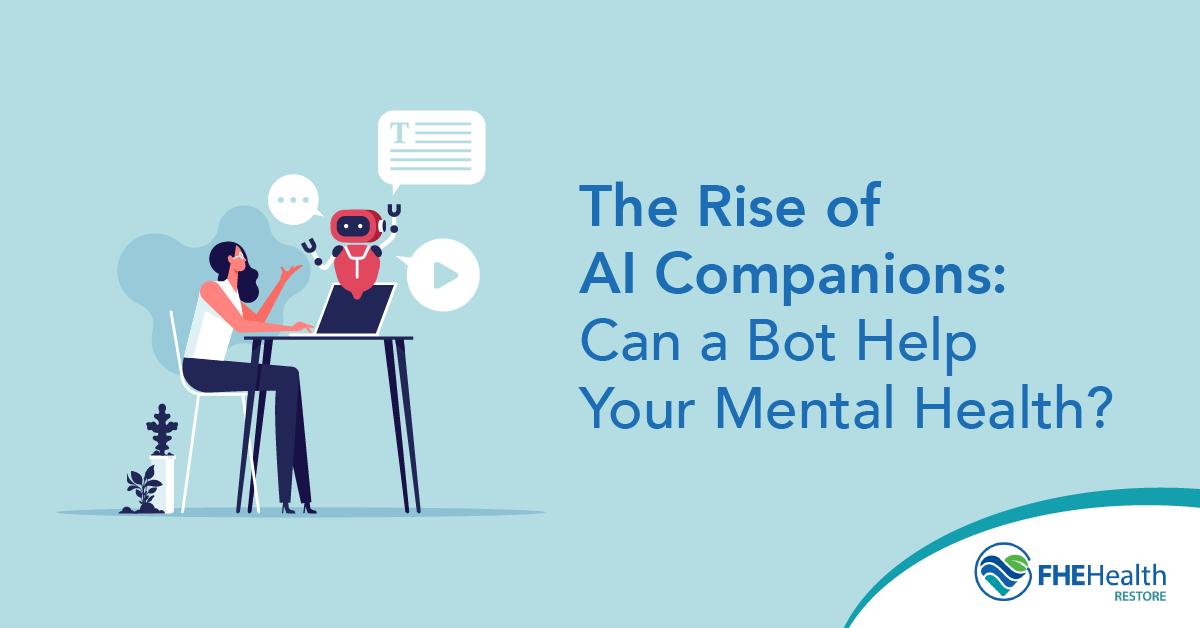
Artificial intelligence is slowly finding its way into mental health care. One example is the chatbot companion, a type of AI that can chat with users and give empathetic advice when prompted in the right way. For some people, these digital companions are a way to ease loneliness or manage anxiety when human help feels out of reach.
The demand for AI therapy apps and emotional support bots is growing at a rapid rate. Artificial intelligence therapy promises judgment-free conversations and round-the-clock availability, something traditional therapy often can’t match. Still, experts question whether these programs can truly understand human emotion or offer safe mental health support. Knowing what AI companions can and can’t do helps users decide how much to trust them on their mental health journey.
What Are AI and Mental Health Chatbot Companions?
AI companions are computer programs that use natural language processing to hold conversations with users. A chatbot companion is one designed to offer emotional support or mental health guidance. The idea is simple: Instead of talking to a person, users talk to an algorithm that’s trained to respond in an empathetic, helpful way.
While many people turn to mainstream chatbots such as ChatGPT and Gemini, others are using specially developed apps that offer emotional support and friendship by design. These chatbots can check in daily and suggest small coping strategies when stress builds up.
The trend is growing quickly. A 2025 Kantar study found that more than half of users have turned to AI at least once for emotional or mental well-being support. This rise reflects both growing public interest in mental health and increased comfort with digital companionship. Still, experts stress that while AI chatbots can help bridge a gap in care, they shouldn’t replace professional therapy.
Potential Benefits: Accessibility, Anonymity and Support
One of the main appeals of a chatbot companion is accessibility. These apps are available instantly and don’t require insurance or waiting lists. For people in rural areas or those hesitant to speak to a therapist, an AI chat can feel like an easy first step toward help.
Anonymity also plays a major role. Talking to a program removes the fear of being judged, which can make it easier to open up about anxiety, loneliness or depression. Many users report finding it easier to share thoughts with an app than with friends or family. The familiarity of texting and the immediate feedback loop can also create a sense of comfort.
Risks and Limitations of AI-Driven Emotional Support
AI chatbots can provide comfort, but they have clear limits. A chatbot companion doesn’t truly understand emotion. It analyses text patterns and predicts suitable replies. That can feel helpful in the moment, but it means there’s no genuine empathy or lived experience behind the response. For someone in deep distress, that difference matters.
Accuracy is another concern. AI tools may give advice that sounds confident but isn’t clinically safe or appropriate. Without human oversight, even a small misunderstanding could lead to harmful suggestions. A 2024 study in Frontiers in Psychology found that AI-generated responses about mental health were often rated as empathetic but lacked practical accuracy, showing that tone alone can be misleading.
How Bots Compare to Human Therapists and Support Systems
AI chatbots can be helpful, but they’re not a replacement for human connection. Even the most advanced AI therapist can only mimic empathy, not feel it. Human therapists bring lived experience and the ability to read tone and body language — things an algorithm can’t replicate.
In traditional therapy, a counselor can adjust techniques in real time, pick up on emotional cues, and explore past experiences that shape a person’s mental health. A chatbot companion works from preprogrammed data and learned language patterns. It can ask the right questions, but it doesn’t truly understand the answers.
Ethical Concerns and Privacy Considerations
AI chatbots rely on user data to improve their responses, but that raises real privacy concerns. When people share personal thoughts with a chatbot companion, those conversations may be stored or used to train future systems. Most users never read the fine print, so they don’t always know how their data is handled or who has access to it.
There’s also an ethical question about emotional boundaries. Some AI companions are programmed to sound caring or even affectionate, which can blur the line between genuine connection and artificial engagement. This can make users feel supported in the short term but emotionally dependent in the long run.
Before trying any AI tool for emotional support, it’s worth checking its privacy policy and making sure it’s linked to a credible mental health organization or research-backed approach. Users should also be careful with sharing their personal details, such as their name, address or any other personal data that could link back to them or be shared with a third party.
Best Practices for Using AI Tools in Your Mental Health Journey
AI chatbots can be helpful if they’re used with realistic expectations. They’re best seen as a supplement to, instead of a substitute for, therapy. For people who feel nervous about opening up or who can’t access traditional care, a chatbot companion can be a first step toward support.
Choose apps that are transparent about how they work and where your data goes. Look for those linked to licensed clinicians or evidence-based methods, such as cognitive behavioral therapy. If the tool offers resources for connecting with a human therapist when needed, that’s a positive sign.
Most importantly, notice how you feel after using it. If it helps you reflect or calm down, that’s progress. If it starts to replace real connection or makes you feel worse, it’s time to step back and reach out for professional help instead.
When to Seek Professional Help
If you’re struggling with your mental health and need more than digital support, Restore Mental Health can help. Our compassionate team of therapists is available 24-7 to guide you toward lasting recovery. Contact us today to begin your healing journey.