
Relationships play an important role in emotional well-being, but for a person with a schizotypal personality, forming and maintaining them can be difficult. Understanding this personality disorder is the first step toward getting help for the condition. Let’s take a look at what schizotypal personality disorder (STPD) is and what causes it. It’s also often confused with schizoid personality disorder, another Cluster A condition, so this guide covers both and how they differ.
What Is STPD?
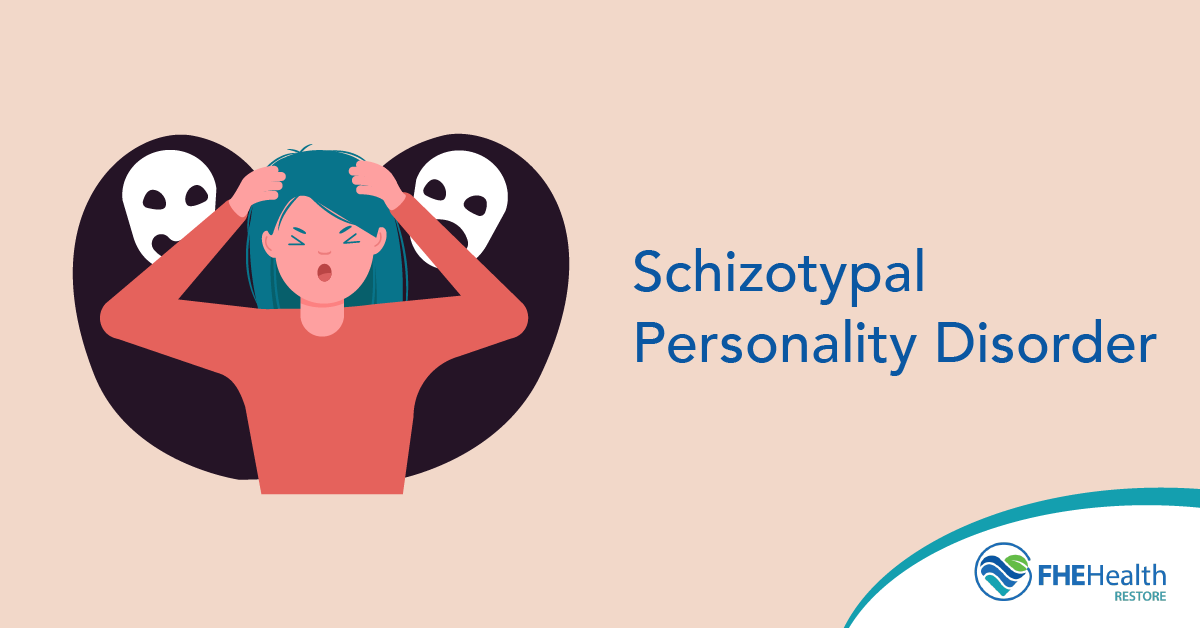
Schizotypal personality disorder is a type of personality disorder. Basically, it’s a mental health condition that affects how people think, feel and behave. People who have a schizotypal personality have difficulty forming relationships. They often find it challenging to interpret the motivations, feelings and behaviors of others, and they might exhibit strange characteristics that complicate social interactions.
Individuals with STPD also commonly manifest inappropriate emotional responses, such as laughing at sad situations or crying when they hear good news, which also complicates relationships with other people.
STPD is a type of Cluster A Personality Disorder. This category of disorders is made up of paranoid, schizoid, and schizotypal personality disorders. Cluster A Personality Disorders typically involve odd or eccentric behaviors and thoughts, often leading to social detachment, distrust, and restricted emotional expression. Another example of a Cluster A Personality Disorder is Schizoid Personality Disorder (SPD) which is an extreme social detachment disorder.
Schizoid vs. Schizotypal Personality Disorder: What’s the Difference?
Both conditions belong to Cluster A and involve limited close relationships, but the reasons differ. People with schizoid personality disorder are generally detached and uninterested in social connection, and they tend to show a limited range of emotion. People with schizotypal personality disorder often experience social anxiety, along with odd beliefs, unusual perceptions and eccentric speech or behavior that aren’t typical of schizoid personality disorder. Both conditions are described in more detail below.
What Are the Symptoms of Schizotypal Personality Disorder?
Most people are diagnosed with schizotypal personality in early adulthood, but symptoms often start showing during childhood and adolescence. Typically, to receive an STPD diagnosis, a person must exhibit at least five of nine diagnostic criteria, which include:
- Thinking that everyday happenings are deeply significant and related directly to them
- Believing in the supernatural with an interest in things like clairvoyance, telepathy or the paranormal
- Having abnormal perceptions such as hearing a voice or seeing things that aren’t there
- Speaking in a strange way, such as employing many metaphors, using vague terminology or explaining things in an overly complicated manner
- Being paranoid or suspicious of others
- Exhibiting odd behaviors or modifying their appearance in unusual ways
- Not having many friends outside of close family
- Experiencing social anxiety, often due to paranoia
How Does Schizotypal Personality Disorder Differ From Other Mental Health Conditions?
Schizotypal personality symptoms can be similar to other mental health conditions. For example, people with schizophrenia may also experience abnormal perceptions, but they tend to be more severe hallucinations than what someone with a schizotypal personality sees or hears.
People with bipolar disorder may have odd ideas, similar to individuals with schizotypal personalities. However, these tend to be full-blown delusions that make it difficult for a person with bipolar disorder to differentiate between reality and fantasy.
Strange behaviors are possible with borderline personality disorder (BPD), but individuals with this condition typically crave connections with others and fear social isolation. Those with schizotypal personality disorder may prefer to be on their own due to social anxiety.
How Common Is Schizotypal Personality Disorder?
Schizotypal personality disorder is relatively rare. Only about 3.9% of the U.S. population has the disorder.
What Causes Schizotypal Personality Disorder?
More research is necessary to fully understand the causes of STPD, but based on previous studies, the following seem to play a role in the condition:
- Genetics. Schizotypal personality tends to run in families, and one or more genes are likely associated with the condition. Individuals who have close relatives with schizophrenia may also be more at risk for developing STPD.
- Environment. People who experience trauma during childhood due to neglect, abuse or instability may be more prone to developing STPD.
- Development. Those with STPD may acquire social skills more slowly than other children and teens. As a result, they may have negative experiences interacting with peers when they’re young and stop trying to form friendships.
How Can Schizotypal Personality Be Treated?
Therapy plays a key role in treatment for STPD. Through cognitive behavioral therapy and other forms of talk therapy, people with the condition can learn to identify patterns of thinking that may be faulty or skewed. They can come to see how their thoughts conflict with reality. In addition, they can begin to build the social skills needed to relate to others and build healthy relationships.
In some cases, health providers may prescribe medications to treat symptoms of STPD. Antipsychotic medicines may reduce perception distortions, disordered thinking and odd speech and behaviors. Antidepressant medications may be recommended to address underlying depression and anxiety.
What Are the Effects of Schizotypal Personality Disorder?
Individuals with STPD are often socially isolated and may experience additional mental disorders. Even without additional mental illnesses, individuals with STPD can face many challenges. They may struggle to succeed at work due to their inability to collaborate with coworkers, and modifications they make to their appearance may be inappropriate for the workplace. STPD also increases the risk of developing substance use disorders, as those with the condition may try to self-medicate with alcohol or drugs to ease anxiety and other symptoms.
Family members of people with STPD often face stress. They may worry about what will happen to their loved one in the future but find it hard to discuss serious matters with them. In addition, they may not know how to interact with them due to their behaviors and odd ways of thinking.
Schizotypal vs. Schizophrenia: How STPD Is Different From Schizophrenia
Schizotypal personality disorder and schizophrenia share some overlapping features, particularly in unusual thinking and behavior, but they’re distinct conditions.
STPD is a personality disorder marked by pervasive patterns of social and interpersonal difficulties, eccentric behaviors and cognitive or perceptual distortions, without the full-blown psychosis characteristic of schizophrenia. While individuals with schizophrenia typically experience hallucinations, delusions and significant impairments in daily functioning, those with STPD are more likely to have strange beliefs but maintain a clearer grasp of reality.
Schizotypal Personality Disorder Symptoms May Include:
- Odd beliefs or magical thinking
- Paranoid or suspicious thoughts
- Eccentric behavior or appearance
- Social anxiety and limited close relationships
- Unusual perceptual experiences
- Odd speech or thought patterns
Schizophrenia Symptoms May Include:
- Delusions (false, fixed beliefs)
- Hallucinations (typically auditory)
- Disorganized speech and behavior
- Negative symptoms (e.g., lack of motivation, flattened affect)
- Cognitive impairments
- Poor insight into their own condition
It’s easy for people with STPD to mistake their symptoms for schizophrenia. Some consider schizophrenia to be a spectrum, with schizotypal being a less severe version of schizophrenia.
Other similarities between the conditions include:
- The connection to reality can be disrupted (slightly for STPD and severely with full-on psychosis for schizophrenia)
- High neuroticism for both
- Impairment (medium for STPD and high for schizophrenia)
How Can People With STPD and Their Loved Ones Cope With the Disorder?
Loved ones have an important role to play in the treatment of STPD. Since the person dealing with the disorder may have distorted thoughts and beliefs, mental health professionals may turn to family members to collect information about their behaviors and history. Being willing to speak honestly and openly about issues can provide valuable information that mental health professionals can use to develop treatment plans.
Family therapy with a mental health professional knowledgeable about STPD can benefit the individual with the condition and their loved ones. During sessions, everyone can share their thoughts and feelings and work together to develop strategies to help the person with STPD navigate daily life.
What Is Schizoid Personality Disorder?
Schizoid disorder is a relatively rare personality disorder. As part of the Cluster A family of disorders, schizoid type personality disorder is marked by unusual or eccentric thinking and behavior. In the case of schizoid disorder, this comes out as a disconnection or sense of distance from other people. This limits the ability of people with the condition to form normal relationships with others, and it may occur alongside other disorders such as depression and paranoia.
Schizoid disorder is a personality disorder that drives people to avoid contact with others and to withdraw from social interactions other people consider normal. People with schizoid disorder often express a disinterest in making or keeping up social bonds, usually expressing a preference for being alone. The condition may make it difficult for people to pick up on social cues from others, and many report an inability to feel pleasure from associating with people in social settings.
Many people with schizoid disorder show physical signs of the condition. Often, people with this disorder show a limited range of emotional expression and may appear cold or indifferent to other people. It’s common for people with schizoid type personality disorders to refrain from dating, and they may even live alone or avoid sexual relationships altogether.
How Schizoid Personality Disorder Differs From Other Personality Disorders
Schizoid disorder shouldn’t be confused with other asocial or antisocial personality disorders. Unlike antisocial personality disorder, also called sociopathy, people with schizoid disorder generally know the difference between right and wrong, and they don’t generally show abnormal hostility or lack of regard for other people. The condition also differs from paranoid personality disorder, which is marked by fear of other people’s motives and the suspicion that others are plotting against the person. People with schizoid disorder aren’t necessarily paranoid or hostile but simply indifferent to social contact with others.
In many ways, schizoid disorder shows signs that can easily be confused with clinical depression. As with depression, people with schizoid disorder can be withdrawn and uninterested in the normal social activities other people enjoy, such as get-togethers and parties. A person may also have schizoid disorder and depression at the same time, which complicates the diagnosis of both conditions. Unlike depression, however, schizoid disorder isn’t generally marked by a recent loss of interest. Instead, it’s often a lifelong disinterest in social interaction.
Possible Causes of Schizoid Personality Disorder
The cause of schizoid disorder isn’t known for sure. As with many personality disorders, it seems likely that people with schizoid type personality disorders develop the condition through a combination of genetics and life experience. A history of childhood trauma is very common among people who later develop a schizoid type condition.
Schizoid disorder most often develops during the teen years, when it may be mistaken for normal teenage moodiness or a passing phase. Researchers don’t know whether the disorder is triggered by hormonal changes during adolescence, the stress of being a teen or a combination of the two. Scientists have identified a number of factors that indicate a higher risk of developing schizoid personality disorder, including having a parent or other relative with a history of schizoid disorder, schizotypal personality disorder or schizophrenia. A childhood history of neglect, abuse, emotional distance from parents and other social disruptions are also indicated as possible sources of schizoid disorder.
Diagnosis of Schizoid Personality Disorder
It can be difficult to diagnose schizoid personality disorder, not least because people with the condition often think there’s nothing wrong and may avoid treatment. As a result, schizoid disorder is frequently only found when the person seeks help for another condition, such as depression or social anxiety disorder. During the initial assessment, a doctor or mental health professional may ask directed questions to establish how likely it is the person has schizoid disorder.
Psychologists and psychiatrists who suspect schizoid disorder frequently ask about a person’s childhood history, the current state of their relationships and their work history to establish patterns that may indicate the condition is present. For schizoid disorder in particular, it’s common for therapists to work with family members to gain further insight into a person’s behavior and develop a more complete picture of how they operate in social settings away from the office environment.
Treatment Options for Schizoid Personality Disorder
After schizoid disorder has been diagnosed, the therapist works with the patient and their family members to develop a comprehensive treatment plan. This can be exceptionally difficult for people with schizoid disorder because they tend to rationalize their symptoms and are rarely motivated to seek treatment due to their overall lack of interest in others. Talk therapy is the most common approach to treatment, but it may be necessary to try several approaches to get the best response.
- Cognitive behavioral therapy (CBT): Unlike free-form psychoanalysis, CBT is a structured approach to talk therapy that focuses on specific goals and treatment milestones. In CBT, the therapist takes on the role of a trainer and helps the person getting treatment understand how their actions affect others. In treating schizoid disorder, the therapist may decide to focus on how the person perceives their relationships with other people and how the disorder negatively impacts their own life.
- Family therapy: It’s very common for people with schizoid disorder to get treatment at their family’s request rather than on their own. As a basis for treatment, family therapy tends to focus on how the person with the disorder is affecting the people closest to them with their behavior and emotional distance.
- Group therapy: It’s sometimes helpful to have group therapy away from close family members and friends. In this setting, many people with schizoid type personality disorders may meet and discuss their condition and treatment plans with each other. The accepting atmosphere group therapy provides may encourage openness and honesty, and it may help patients develop their social skills.
Coping Strategies for People With Schizoid Personality Disorder
Fortunately, people with schizoid disorder don’t typically have trouble functioning in society at large, even if they do lack personal connections with people. Coping strategies for this disorder tend to focus on education about the condition, with an emphasis on spotting common pitfalls and being more aware of how the disorder affects other people. Continued therapy, honest communication and an awareness of the social environment are some of the most productive ways people find to stay on top of their schizoid disorder.
Get Help for Schizotypal and Schizoid Personality Disorder
With the right treatment, a person with a schizotypal or schizoid personality can reduce their symptoms and build stronger relationships. Restore Mental Health in Deerfield Beach offers a variety of treatment options, including interventions for secondary mental health conditions such as depression and anxiety. Call (877) 810-2074 or contact us today to learn more about the help available for you or your loved one.
Contact Restore Mental Health