
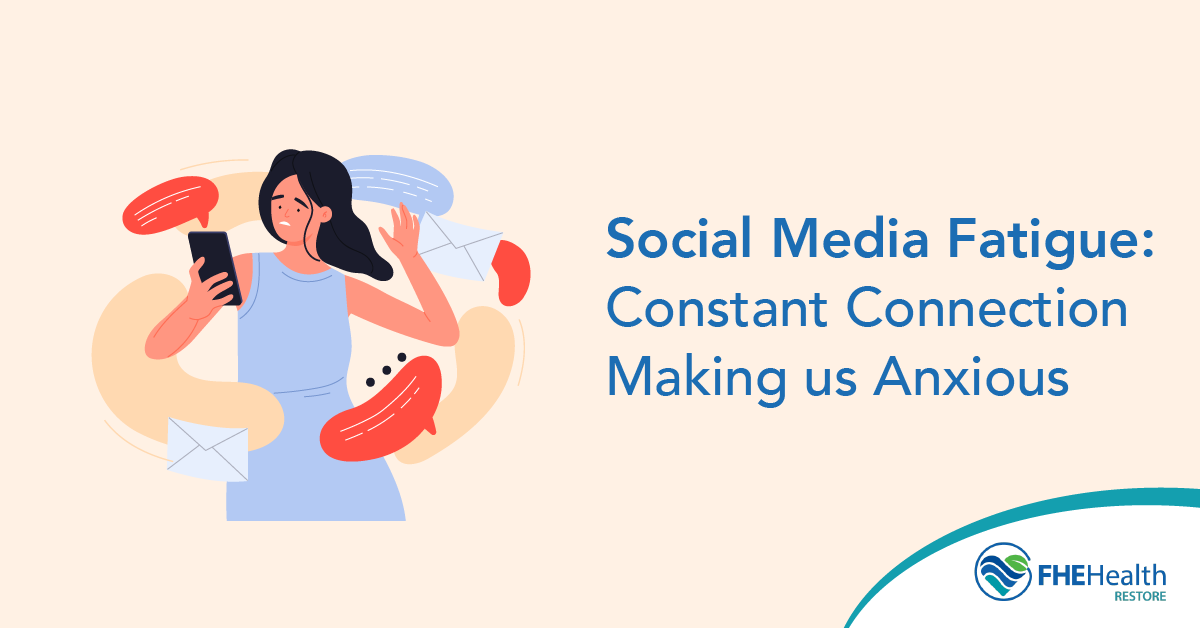
You reach for your phone before your morning coffee. You check Instagram while waiting in line at the grocery store. You scroll through TikTok during commercial breaks. By evening, your eyes hurt, your mood feels off and you can’t quite pinpoint why you’re so exhausted. If these scenarios sound familiar, you’re not alone in feeling overwhelmed by the endless stream of posts, notifications and updates demanding your attention. The relationship between social media and mental health has become one of the most pressing concerns of our digital age.
What started as a way to stay connected with friends and family has evolved into something far more consuming. The average person now spends over 2 hours per day on social platforms, and this constant exposure comes with real psychological costs. Understanding how this daily digital immersion affects your well-being is crucial for taking control of your mental health.
What Is Social Media Fatigue?
Social media fatigue is the mental and emotional exhaustion resulting from prolonged engagement with online platforms. It’s the drained feeling you get from hours of scrolling, the anxiety spike when notifications pile up and the subtle sense you’re always “on,” even when you’re trying to relax.
How Constant Connectivity Fuels Anxiety and Burnout
Your brain wasn’t designed for constant connectivity. When you’re perpetually plugged in, your nervous system stays activated in a low-grade fight-or-flight state. Every ping and notification triggers a cortisol response. Over time, this chronic stress leads to burnout. Studies have found higher social media use is associated with increased anxiety and depression symptoms.
The pressure to stay updated creates what psychologists call “FOMO” — fear of missing out. You feel compelled to check your feeds constantly because you might miss something important. This compulsion can interfere with sleep, work productivity and face-to-face relationships. The negative effects of social media become apparent when you realize you’re checking your phone not because you want to, but because you feel you have to.
Signs You May Be Experiencing Social Media Fatigue
How do you know if you’ve crossed the line from casual use to problematic engagement? Here are some key warning signs:
- Feeling anxious or irritable when you can’t access your phone
- Checking social media feeds immediately when you wake up and last thing before you go to sleep.
- Comparing your life to others’ highlight reels and feel inadequate
- Losing interest in hobbies that don’t involve screens
- Feeling emotionally drained after scrolling sessions
- Finding it difficult to focus on tasks without checking notifications
The Psychology Behind Compulsive Scrolling and Comparison
Social platforms are engineered to keep you engaged. Variable reward schedules — the same mechanism that makes slot machines addictive — keep you scrolling in hopes of finding an interesting post. Each swipe might reveal something entertaining, validating or emotionally charged, so you keep going.
The effects of social media are particularly damaging to your self-esteem when you engage in upward social comparisons. You see friends’ vacation photos, colleagues’ promotions and influencers’ seemingly perfect lives. Your brain processes these curated highlights as reality and finds your own life lacking in comparison.
Additionally, the dopamine hit you get from likes and comments creates a feedback loop. You post, you wait, you check and the anticipation itself becomes addictive. This cycle hijacks your brain’s reward system, making it harder to find satisfaction in offline activities offering slower, more meaningful rewards.
The findings of a study performed by the University of Pennsylvania suggest limiting social media use to 30 minutes per day to counteract these effects and improve feelings of well-being.
Setting Digital Boundaries for Better Social Media and Mental Health
Reclaiming your mental health means establishing clear boundaries with technology. Every ping doesn’t deserve your immediate attention, so start by turning off nonessential notifications. Create phone-free zones in your home — perhaps in the bedroom and at the dining table — where devices aren’t welcome.
Set specific times for checking social media rather than constant, mindless scrolling throughout the day. Use your phone’s screen time features to monitor and limit your usage. When you do engage, do so intentionally rather than as a reflexive response to boredom or discomfort. Consider designating one day per week as a social media sabbath when you disconnect completely.
Curate your feeds thoughtfully. Remember, you control what you consume. When social media mental health becomes a concern, it’s time to be more selective about what enters your digital space. Unfollow accounts that trigger comparison, anxiety or negativity. Follow people and organizations that educate, inspire or genuinely connect with you.
Reclaiming Focus and Emotional Balance Offline
The antidote to social media fatigue isn’t necessarily deleting all your accounts. It’s rediscovering the richness of offline life. Ways to do this include:
- Engaging in activities that require your full attention. Read physical books, have in-person conversations, pursue creative hobbies or spend time in nature.
- Practicing mindfulness to strengthen your ability to be present. When you notice the urge to check your phone, pause and ask yourself what you’re really seeking. Are you bored, anxious or lonely? Address your underlying need rather than reaching for a digital pacifier.
- Rebuilding your attention span gradually. Start with short periods of focused work or activity without your phone nearby, then extend these periods as your concentration improves. Your brain’s ability to focus is like a muscle — it strengthens with practice.
- Investing in face-to-face relationships. The connection you get from a real conversation with a friend provides more emotional nourishment than a hundred social media likes ever could. Make plans that don’t involve phones or photos. Experience moments for their own sake rather than their shareability.
Take Control of Your Digital Life
Understanding the connection between social media and mental health is the first step toward change. If you’re struggling with anxiety, depression or burnout related to constant connectivity, professional support can help you develop healthier patterns and rebuild your emotional well-being. At Restore Mental Health, we understand the unique challenges of our digital age and offer evidence-based treatments to help you find balance. Contact us today to start your journey toward healing.